Is your dog a healthy weight?
Enter your dog’s weight and body condition to estimate its ideal weight and see whether it’s carrying too much — works for any size or breed.
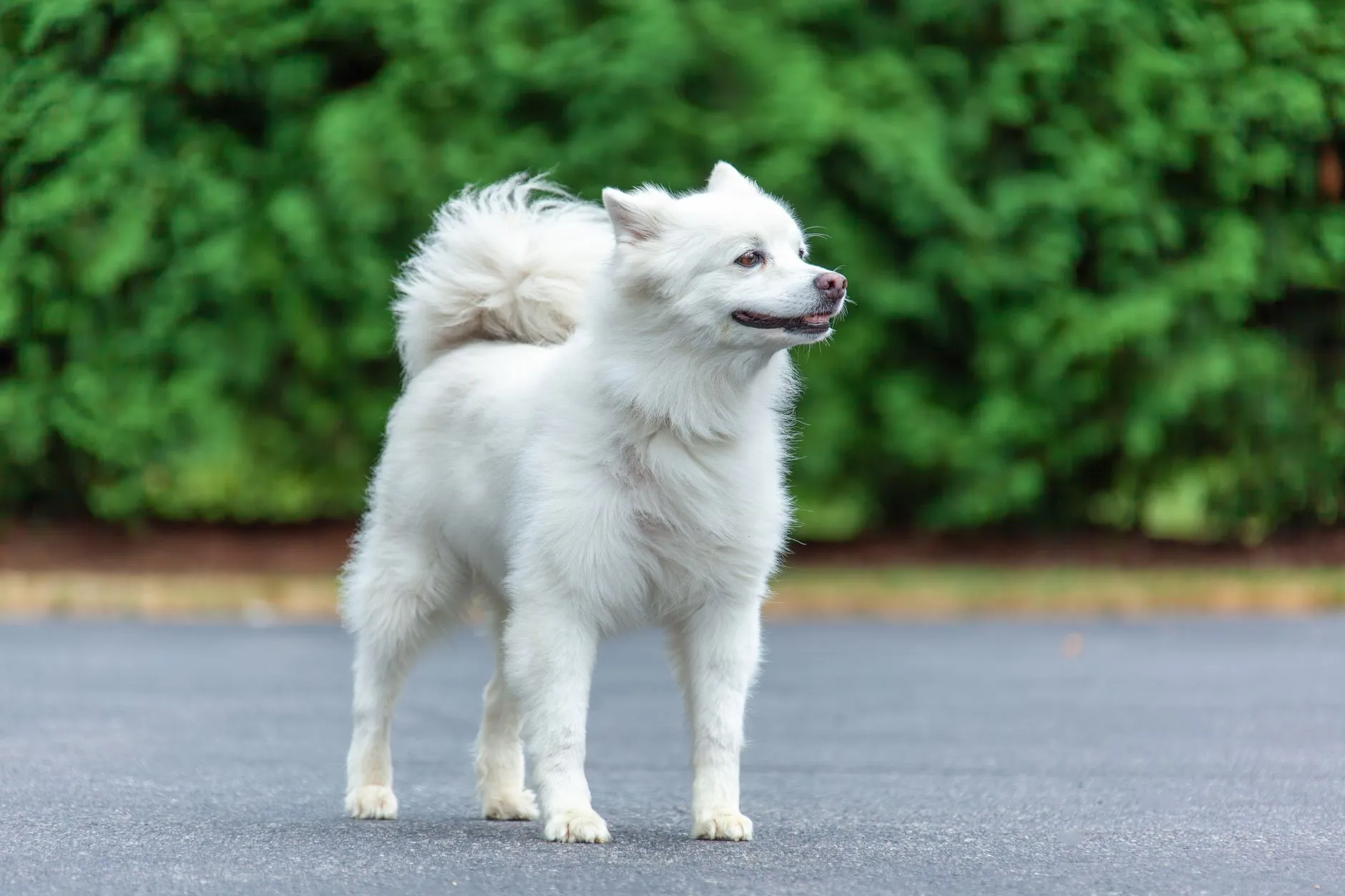
Run both hands over the ribs and look from above and the side: at an ideal 5/9 you can feel the ribs easily under a thin layer, and see a waist behind the ribs. Not sure? Your vet can score it.
Estimated ideal weight
——
Enter your dog’s weight and body condition.
Good to know
General guidance only — an estimate, not veterinary advice. Always check with your vet about your pet’s growth, weight and diet.
How this was calculated
Vets judge a dog’s weight with a 9-point body condition score (BCS), where 5 is ideal. Each point above 5 is roughly 10% over the ideal weight, so we estimate ideal weight as current weight ÷ (1 + (BCS − 5) × 0.1). This works for any size or breed because it reads your dog’s own frame — not an average. It’s an estimate to guide you; your vet can score the body condition precisely.
Source: WSAVA Body Condition Score (9-point) guidelines. Full method on our methodology page.
Built by the PawGauge team, reviewed against cited veterinary sources. Last reviewed 29 June 2026.
About our figures →How to check your dog’s body condition
Run both hands over the ribs and look at your dog from above and the side. Match the shape from above to the closest picture — at an ideal 4–5/9 you can feel the ribs easily and see a waist.
Based on the 9-point body condition score — WSAVA Global Nutrition Guidelines. A guide only; your vet can score your dog precisely.
Reading your dog’s body condition
Scales tell you a number; body condition tells you what it means. On the 9-point scale used by vets, an ideal dog (5/9) has ribs you can feel under a light layer, a visible waist when you look down from above, and an upward tuck of the belly from the side. Above that, the ribs get harder to find and the waist disappears; below it, the bones become prominent.
This calculator turns your score into an estimated ideal weight so you have a target to aim for. It’s a guide, not a diagnosis — body type varies between dogs, and conditions from thyroid disease to arthritis can change weight. If your dog is over or under, your vet can confirm the target and rule out medical causes. To predict how big a puppy will get, use the puppy weight predictor instead.
Dog weight questions
- How do I know if my dog is overweight?
- Use the body condition score. At an ideal 5/9 you can feel the ribs with light pressure, see a waist from above, and see a tuck-up in the belly from the side. If the ribs are hard to feel and the waist has disappeared, the dog is likely overweight.
- What is my dog’s ideal weight?
- It depends on frame, not just breed. This tool estimates it from the current weight and body condition: a dog at BCS 7/9 is about 20% over ideal, so a 60 lb dog would have an ideal near 50 lb. Your vet can refine the target.
- How big will my dog get?
- That’s a different question — this tool checks the ideal weight of a dog you can weigh now. To predict a puppy’s adult size from its current weight and age, use our puppy weight predictor and breed growth charts.
- How do I help my dog lose weight safely?
- Gradually, with measured meals and more exercise, under veterinary guidance. Aim for slow, steady loss rather than crash dieting, and re-check the body condition every few weeks.